


Front coverage
Frontal protection apron
A single-piece design for the front of the body. Confirm the required coverage for the user's position and task.
View frontal apronIndoSurgicals Private Limited manufactures, supplies and exports lead aprons from India for hospitals, imaging centres and healthcare teams.
Explore frontal aprons, wrap-around designs and vest & skirt sets, with lead-based and lead-free core options.
For individual, hospital, institutional and export enquiries.
Compare body coverage and weight distribution, then open the product page to check the available configurations.
A single-piece design for the front of the body. Confirm the required coverage for the user's position and task.
View frontal apron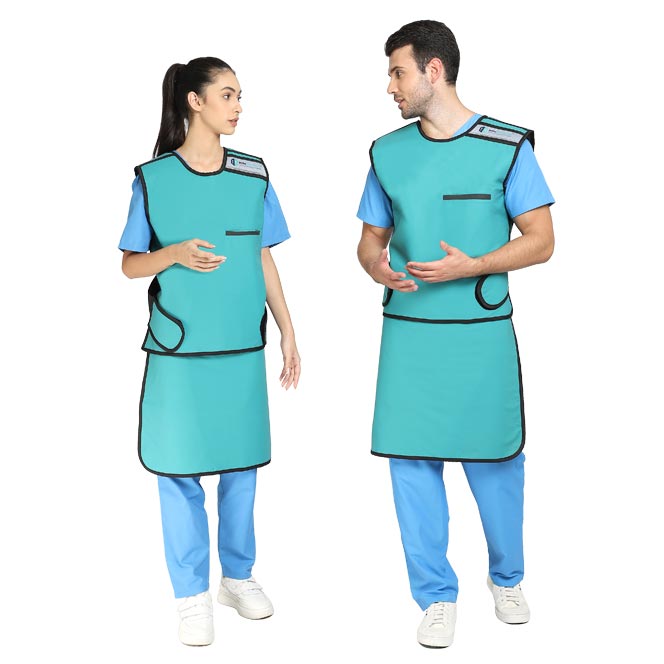
Separate vest and skirt components distribute the garment weight between the shoulders and waist.
View frontal set
A wrap-around design for front and back coverage. Check the specific model's overlap and panel equivalency.
View wrap-around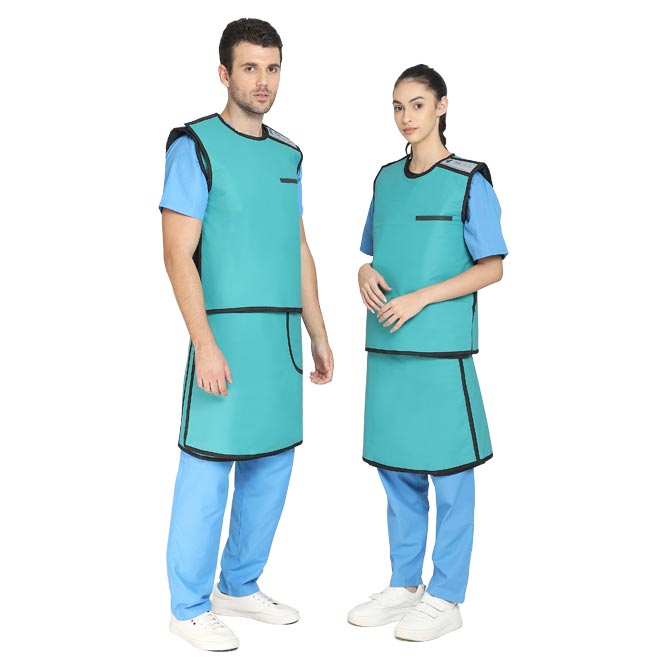
Front and back coverage in a two-piece design. Consider garment fit and wearing duration when comparing options.
View wrap-around setmmPb describes lead equivalency: shielding performance compared with a stated thickness of lead under specified test conditions.
For the same material, size and design, a lower lead equivalency generally means less shielding material and lower garment weight.
Select this option only when it meets your facility's assessed protection requirement.
Compare this option where your facility specifies 0.50 mmPb. Consider the complete garment weight, fit and coverage as well as the stated equivalency.
A procedure name alone does not determine which apron to select.
Confirm the complete specification. Front, back and overlap protection can differ. Ask for the selected model's panel equivalency and test information. Your radiation safety officer or qualified medical physicist should confirm the appropriate protection for the intended use.
Compare the material together with the model, lead equivalency and size. A material name alone does not describe the finished garment's weight or protection.
A conventional lead-based core option for IndoSurgicals radiation protection garments. Check the available configuration on the selected product.
Lead-free core options for selected configurations. Confirm the specific material, tested equivalency and finished garment weight when requesting a quotation.
A useful comparison starts with the wearer and the workplace, then moves to the product specification.
Confirm exposure direction and required body coverage. Compare frontal and wrap-around designs for the intended task.
Confirm lead equivalency, panel coverage and any required product documentation with your radiation safety team.
Check measurements, fit and wearing duration. Compare a single-piece apron with a vest & skirt set.
Specify model, core material, equivalency, size and quantity. Add the delivery destination and any accessories.
Discuss requirements for radiology, fluoroscopy, C-arm, cath lab, interventional and veterinary imaging environments. Suitability depends on the selected product and your facility's radiation protection assessment.
Dental and patient shielding requirements should follow the applicable clinical guidance and local policy.
Check that the garment covers the required area, closes correctly and allows practical movement. A vest & skirt changes how the garment weight is supported; the benefit depends on fit and the wearer.
Use within your facility's protection programme. An apron helps reduce exposure to scattered X-rays. It works alongside appropriate positioning, distance, exposure-time control, shielding and personal monitoring.
Follow the care instructions supplied with your garment and your facility's inspection procedure.
Use only cleaning methods and products approved for the garment.
Support the garment with a suitable apron hanger or rack.
Inspect the cover, seams, closures and label, and arrange the required checks of shielding integrity.
Suspected damage? Remove the garment from use until it has been assessed under your facility's radiation safety procedure. An intact outer cover alone does not establish shielding integrity.
Select a question to read the answer.
It is a protective garment used to reduce exposure to scattered X-rays in appropriate medical imaging and related settings. The selected product and its use must match your facility's protection requirements.
mmPb means millimetres of lead equivalency. It describes shielding performance compared with a stated thickness of lead under specified test conditions; it is not simply the physical thickness of the fabric.
Use the equivalency specified by your facility's radiation safety assessment. Compare the model, material, size, coverage and weight together, and confirm the requirement with your radiation safety officer or qualified medical physicist.
No. Protective aprons have a defined intended use and shielding specification. Do not assume an apron provides suitable protection for every radiation source or exposure situation.
Lead-based garments use a lead-containing shielding core. Lead-free garments use other shielding materials. Confirm the specific core material and its test information; lead-free does not automatically mean lighter in every size and configuration.
That depends on the task, exposure direction, coverage requirement and wearing duration. Compare the fit and weight of the actual garment, with protection requirements confirmed by your facility.
Compare frontal and wrap-around designs against the coverage required for the technician's position and work. A single-piece apron and a vest & skirt support weight differently.
A wrap-around design provides front and back body coverage. The front, rear and overlapped areas may have different lead equivalencies; check the selected model's specification.
It divides the garment into two pieces and distributes weight between the shoulders and waist. Comfort depends on correct fit, garment weight and the wearer's preference.
Check the selected product's size guidance and the wearer's measurements. The garment should close correctly and cover the required area while allowing practical movement. Ask for help if measurements fall between sizes.
Service life depends on the garment, handling, storage, use and inspection findings. Follow the manufacturer's instructions and your facility's replacement criteria rather than relying on age alone.
Check the supplied product information for any stated service-life or replacement requirement. Continue using a garment only when it meets the applicable inspection and condition requirements.
Follow the manufacturer's instructions and the inspection schedule set by your facility's radiation protection programme. Report suspected damage immediately and arrange formal checks as required.
Avoid sharp folding and creasing. Use a suitable hanger or rack and follow the storage instructions supplied with the garment.
Follow the garment's care instructions. Use only compatible cleaning products and methods. Do not machine wash, dry clean, autoclave or iron the apron.
IndoSurgicals Private Limited manufactures, supplies and exports radiation protection aprons from India. Explore the current product range to compare available designs and configurations.
Check that the specific garment has the required tested lead equivalency, coverage and intended use. The material description alone does not establish suitability for a particular procedure.
Patient shielding decisions should follow current clinical guidance, local requirements and the facility's radiation protection policy. Do not assume the same requirement applies to every dental examination.
Yes. Send your preferred design, protection level, core material, measurements and quantity. IndoSurgicals can confirm available size options and whether your requested configuration can be supplied.
Browse the lead apron range and send a quotation enquiry with your chosen model, size, material, lead equivalency, quantity and delivery destination. Ask for the current specification and any required documents before ordering.
Send the key details together so we can confirm the available configuration and prepare a relevant quotation.
Confirm the current product specification, configuration and documentation before ordering. Your facility's radiation safety assessment should guide product selection.
Back to topProduct images and specifications are provided for general reference. Product design, colour, packaging and specifications may be updated without prior notice. Please confirm current specifications, certification scope and regulatory applicability before ordering.