

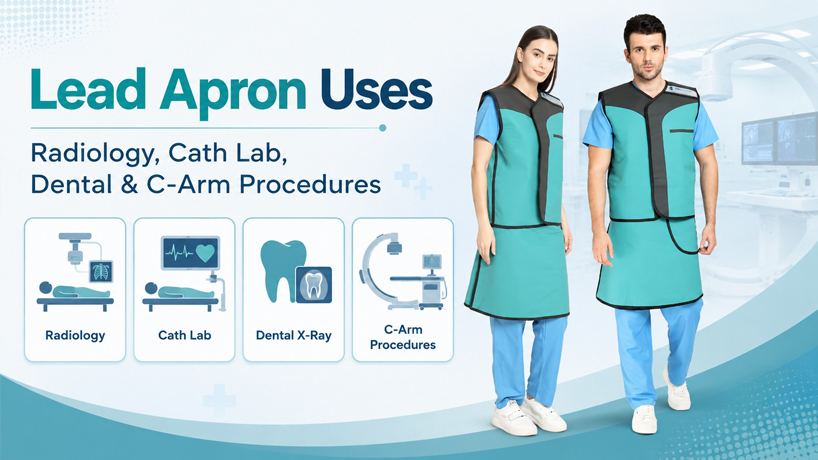
A practical and easy-to-understand guide for choosing the right lead apron by procedure, user role, protection level and comfort requirement.
Lead aprons are one of the most important radiation protection garments used in medical imaging and diagnostic procedures. They are designed to help reduce exposure to scattered X-ray radiation for doctors, radiologists, technicians, dentists, nurses, patients and other healthcare professionals.
Lead aprons are widely used in radiology departments, cath labs, dental clinics, C-arm procedures, fluoroscopy rooms, operation theatres, urology procedures, veterinary X-ray rooms and diagnostic imaging centres.
What Is a Lead Apron Used For?
A lead apron is used to reduce radiation exposure from scattered X-rays during medical imaging and radiation-based procedures. It acts as a protective barrier between the user’s body and scattered radiation.
Radiation Protection
Lead aprons help reduce exposure to scattered X-ray radiation during imaging and diagnostic procedures.
Protective Barrier
The apron works as a protective shielding layer between the body and scattered radiation.
Clinical Safety
They are used by medical professionals, patients and support staff when radiation protection is required.
| User | Purpose |
|---|---|
| Radiologists | Protection during imaging and fluoroscopy procedures |
| X-ray technicians | Protection while assisting patients and operating imaging equipment |
| Cath lab staff | Protection during long fluoroscopy-guided procedures |
| Dentists and dental assistants | Protection during dental X-ray imaging |
| Surgeons and OT staff | Protection during C-arm guided procedures |
| Veterinary doctors | Protection during animal X-ray imaging |
| Patients | Protection of sensitive body areas during selected imaging procedures |
Lead Apron Uses by Department
Different medical departments use lead aprons in different ways. This simple visual guide helps users quickly understand where and why lead aprons are used.
Radiology
Radiology departments use lead aprons for protection during X-ray and imaging procedures. Staff may wear lead aprons while assisting patients, positioning the patient, supporting imaging workflow or staying near the radiation source.
- General X-ray rooms
- Diagnostic imaging centres
- Portable X-ray procedures
- Fluoroscopy support
- Protection of staff and attendants
Cath Lab
Cath lab procedures often involve fluoroscopy and may continue for long durations. Cath lab professionals generally require reliable radiation protection with good wearing comfort.
- Interventional cardiologists
- Cath lab technicians
- Nurses
- Radiology staff
- Support staff assisting during procedures
Dental X-Ray
Dental clinics use lead aprons during dental X-ray imaging to protect patients and staff from scattered radiation.
- Dental X-ray rooms
- Intraoral X-ray procedures
- OPG imaging
- CBCT imaging
- Patient protection during dental radiography
C-Arm Procedures
C-arm procedures are common in operation theatres, orthopaedics, urology, pain management and interventional procedures.
- Orthopaedic C-arm procedures
- Urology procedures
- Pain management procedures
- OT imaging support
- Fluoroscopy-guided interventions
Fluoroscopy
Fluoroscopy procedures involve real-time X-ray imaging. Healthcare professionals may remain near the patient and imaging equipment, so lead aprons are commonly used.
- Interventional radiology
- Gastrointestinal procedures
- Urology imaging
- Cath lab procedures
- OT-guided imaging
Urology
Urology procedures may involve C-arm or fluoroscopy guidance. Lead aprons help protect doctors, technicians and OT staff from scattered radiation.
- Stone procedures
- Endourology procedures
- C-arm assisted urology procedures
- Fluoroscopy-guided urological interventions
- Operation theatre imaging support
Veterinary X-Ray
Veterinary clinics and animal hospitals use lead aprons during X-ray imaging because staff may need to stay near animals during positioning.
- Veterinary X-ray rooms
- Animal positioning during X-ray
- Equine and large-animal imaging
- Small-animal diagnostic imaging
- Veterinary dental imaging
Patient Protection
Lead aprons may be used for patient protection during selected imaging procedures when shielding does not interfere with the diagnostic image.
- Frontal protection aprons
- Dental lead aprons
- Gonad shields
- Ovarian shields
- Thyroid shields
- Breast protectors
Selection Depends On
The final apron selection should depend on procedure type, exposure level, wearing duration and institutional radiation safety policy.
- Procedure type
- Exposure level
- Duration of wearing
- User movement
- Comfort requirement
Which Lead Apron Type Is Suitable for Each Use?
This table makes selection easier by connecting the clinical application with commonly suitable apron type and protection level.
| Application | Commonly Suitable Apron Type | Common Protection Level |
|---|---|---|
| General radiology | Frontal protection apron | 0.35 mmPb or 0.50 mmPb |
| Dental X-ray | Dental apron / frontal protection apron | 0.35 mmPb |
| Cath lab | Full protection apron | 0.50 mmPb |
| C-arm procedures | Frontal or full protection apron | 0.50 mmPb |
| Fluoroscopy | Full protection apron | 0.50 mmPb |
| Urology procedures | Frontal or full protection apron | 0.50 mmPb |
| Veterinary X-ray | Frontal protection apron | 0.35 mmPb or 0.50 mmPb |
| Patient protection | Procedure-specific shielding | As required |
The final selection should depend on procedure type, exposure level, wearing duration and institutional radiation safety policy.
Lead Apron Core Materials Used by IndoSurgicals
IndoSurgicals offers multiple core material options for different user requirements, including conventional lead-based and modern lead-free options.
StPb®
StPb® is a traditional lead-vinyl radiation protection core material. It is a cost-effective option for users who prefer conventional lead-based shielding for standard X-ray protection applications.
NoPb®-LT
NoPb®-LT is a lead-free lightweight radiation protection core material designed for reliable X-ray shielding with good flexibility, durability and reduced weight.
NoPb®-SL
NoPb®-SL is a super lightweight lead-free radiation protection core material designed for better wearing comfort during long medical procedures.
NoPb®-BL
NoPb®-BL is a premium lead-free radiation protection core material tested under broad beam geometry conditions for users who require strong technical documentation.
Lead Apron Protection Levels
IndoSurgicals supplies radiation protection aprons mainly in two protection levels: 0.35 mmPb and 0.50 mmPb.
Routine Diagnostic Use
Commonly used for routine X-ray, dental, veterinary, general radiology and diagnostic applications where moderate protection and better comfort are required.
Higher Protection Use
Commonly selected for cath lab, C-arm, fluoroscopy, urology and interventional procedures where exposure may be higher or procedure duration may be longer.
Frontal vs Full Protection Lead Aprons
The right pattern depends on whether radiation exposure is mainly from the front or whether broader front-and-back protection is required.
 Frontal Protection Lead Apron • SKU 91161
Frontal Protection Lead Apron
A frontal protection apron protects mainly the front side of the body. It is suitable when the user faces the radiation source and back-side exposure is not a major concern.
- General radiology
- Dental X-ray
- Veterinary X-ray
- Routine diagnostic imaging
- Some C-arm applications
 Full-Overlap Full Protection Lead Apron • SKU 91581
Full Protection Lead Apron
A full protection apron provides front and back coverage. It is commonly preferred in cath lab, fluoroscopy and interventional procedures where the user may move or require broader coverage.
- Full-overlap full protection apron
- Partial-overlap full protection apron
- Vest and skirt style apron
- Suitable for cath lab and fluoroscopy
- Better for broader protection needs
Simple 4-Step Selection Method
For hospitals, clinics and diagnostic centres, this simple method makes lead apron selection easier.
Frequently Asked Questions
Quick answers to common questions about lead apron uses in radiology, dental, cath lab, C-arm and diagnostic imaging.
What are lead aprons used for?
Lead aprons are used to reduce exposure to scattered X-ray radiation during radiology, dental X-ray, cath lab, C-arm, fluoroscopy, urology, veterinary and diagnostic imaging procedures.
Who should wear a lead apron?
Doctors, radiologists, technicians, dentists, cath lab staff, OT staff, veterinary doctors and other healthcare professionals may wear lead aprons when working near X-ray or fluoroscopy equipment.
Are lead aprons used in dental clinics?
Yes. Lead aprons are commonly used in dental clinics during dental X-ray, OPG and CBCT imaging for patient and staff protection when required.
Which lead apron is used in cath lab?
For cath lab procedures, full protection lead aprons are generally preferred, often in 0.50 mmPb lead equivalent protection.
Can lead aprons be used for C-arm procedures?
Yes. Lead aprons are widely used during C-arm procedures in orthopaedics, urology, pain management, operation theatres and interventional procedures.
What is the best lead apron for long procedures?
For long procedures, a lightweight or lead-free apron material such as NoPb®-SL may be preferred because it offers better wearing comfort.
Conclusion
Lead aprons are used in many medical and diagnostic environments where protection from scattered X-ray radiation is required. Common uses include radiology, cath lab, dental X-ray, C-arm procedures, fluoroscopy, urology, veterinary X-ray and patient protection.
The right lead apron should be selected according to the procedure type, protection level, apron pattern, wearing duration and user comfort requirement.
IndoSurgicals offers StPb®, NoPb®-LT, NoPb®-SL and NoPb®-BL core material options in different apron designs, helping healthcare professionals choose the right radiation protection apron for their application.
Explore IndoSurgicals Lead Aprons
Choose from reliable radiation protection aprons for radiology, dental clinics, cath labs, C-arm procedures, fluoroscopy, urology, veterinary X-ray and diagnostic imaging applications.